Setup Your Business in the UAE's Thrivingfree zones
Choosing the suitable Freezone for your business is something like unlocking a treasure in the dynamic business hub of the UAE. At Bizdaddy, we assist you to lead you to that goldmine.
A Freezone is referred to as a designated economic area in a country that allows business to operate with unique tax and regulatory advantages. More than 40 free zones exist in the UAE, and they are spread over different emirates, each working under its own set of rules and regulations. A free zone company means a business entity listed in the UAE Free Zone. Business Setup in UAE Free Zones benefits businesses with 100% foreign ownership, zero corporate taxes, decreased import and export duties, and several other benefits. So, it has become an ideal choice for investors and entrepreneurs.
Steps involved in setting up a Business free zone -
Choose a free zone (IFZA, DMCA, DSF, DIO, DSE, JAFZA, more...)
Register your company
Obtain the necessary licenses and permits
Set up your office
Recruit employees
Launch your business operations
Free Zone in Dubai
Top Freezones in UAE
Ras Al Khaimah Economic Zone (RAKEZ)
Ras Al Khaimah Economic Zone (RAKEZ) is located in the heart of the UAE. It is a prominent business authority providing customized solutions for company setup in free zone as well as non-free zone sectors, thus supporting more than 25,000 companies over 50 sectors.
RAKEZ Freezone Setup
Our process is designed for efficiency, ensuring you save valuable time.
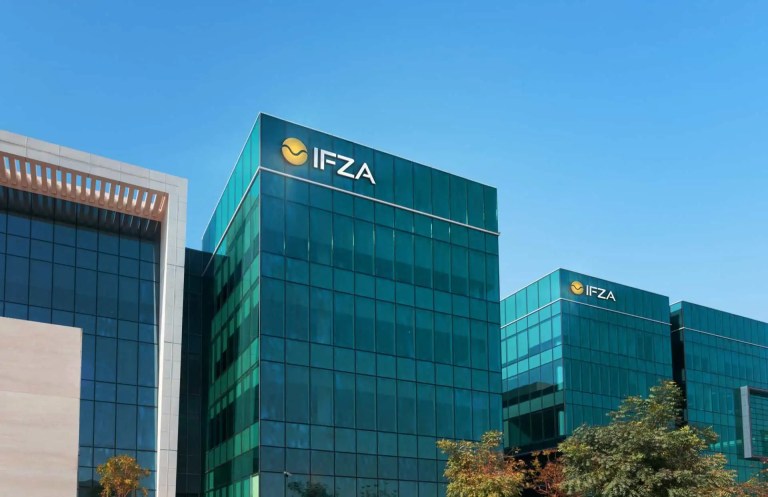
Being one of the leading free zones in the UAE, IFZA is the only business-to-business (B2B) focused free zone in the country. Setting up a company in this zone provides benefits like scalability, outstanding infrastructure, and a convenient business setup process.
IFZA Freezone Setup
Our process is designed for efficiency, ensuring you save valuable time.
It is a multi-purpose free zone in the UAE and is situated close to the Jebel Ali Port & the Al Maktoum International Airport. It is a major area for company establishments benefitting businesses with feasible setup and widespread trade opportunities.
DSF Freezone Setup
Our process is designed for efficiency, ensuring you save valuable time.
DSO is Fully owned by the UAE’s government, DSO is located in an area adjoining the UAE and Al Ain road. It involves a mix model of residential, industrial and commercial space. So, it serves as a multi-purpose zone for a wide range of business setups.
DSO Freezone Setup
Our process is designed for efficiency, ensuring you save valuable time.
This thriving free zone is a technological hub and has supported Fortune 500 companies, startups, and SMEs. It has aided these businesses to setup offices in the region. It is straightforward to setup your business in DIC free zone with the BizDaddy Business Setup services.
DIC Freezone Setup
Our process is designed for efficiency, ensuring you save valuable time.
DAZFA serves as a perfect zone for transport and logistics companies and those businesses dealing with import and export. Due to the vicinity to the Dubai International Airport, this free zone supports a dedicated logistics centre that offers freight management centres.
DAFZ Freezone Setup
Our process is designed for efficiency, ensuring you save valuable time.
DSP free zone offers an exceptional business landscape with dedicated infrastructure, loyal facilities, growth and variation in the capital movement. It stands out as the world’s only commercial hub to support industries and companies in the life science sector.
DSP Freezone Setup
Our process is designed for efficiency, ensuring you save valuable time.
JAFZA, the foremost Freezone in the whole Middle East, and is strategically located close to Jebel Ali Port, Dubai International Airport, and Al Maktoum Airport. Due to hassle-free access through the Dubai Metro, JAFZA free zone company formation is suitable for businesses engaged in import, export, and trading in the UAE.
JAFZA Freezone Setup
Our process is designed for efficiency, ensuring you save valuable time.
Dubai Maritime City Freezone is the UAE's specialised maritime hub and it operates under the Dubai World Group of Companies. It was founded to reinforce and enhance the region's maritime competitiveness, and serves as a dedicated centre for this industry.
DMCA Freezone Setup
Our process is designed for efficiency, ensuring you save valuable time.
Acknowledged as the world’s leading Freezone, DMCC is strategically situated in the heart of the UAE. DMCC free zone company setup presents widespread opportunities for retail and commerce sectors. It is prestigious as one of the only two Freezones in the UAE that support crypto-commodities trading.
DMCC Freezone Setup
Our process is designed for efficiency, ensuring you save valuable time.
Passport copies (of all managers, directors, and shareholders)
Proof of address (for all managers, directors, and shareholders)
A comprehensive business plan specifying your business’ objectives, activities, and market analysis
A filled registration application form specifying all details of your business
A resolution from the board of directors on the nomination of the company’s director or manager (It must be duly certified)
The office space’s lease agreement
& Trade License provided by the Free Zone authority
An Ejari certificate (a rental contract registration with the UAE Land Department)
Visa application forms for employees and the business owner, along with the required documents
What types of businesses can be set up in UAE Freezones?
You can set up various kinds of businesses belonging to different sectors in UAE Freezones. Common types of business setup in UAE are outlined below:
Trading companies dealing with export, import, and re-export of goods.
Manufacturing companies that manufacture goods varying from textiles to electronics
Healthcare facilities including clinics, hospitals, and medical centres
Service companies that provide various services like marketing, IT, consulting, etc
Logistics and Warehousing companies providing transportation, storage, and logistics services
Educational institutions including schools, colleges, and training centres
Media and entertainment units involved in broadcasting, media production, and entertainment services.
Technology solutions, research, and development activities
Real estate and construction services
Financial services like insurance, banking, and financial advisory services
Onboard with the best
Company Setup Package
Build a thriving business in Dubai with our Business Setup Package. Benefit from personalized guidance, strategic planning, tailored training, and customized solutions to ensure your success.
Sharjah Free Zone
Starting from
AED
5,750
E-commerce Trade License
Upgrade to 1 Visa Package at a nominal fee
Lease Agreement
No local sponsor required
The most cost-effective free zone
100% Tax-Free Benefit
Dubai Free Zone
Starting from
AED
12,900
Trade License
Upgrade to Visa Package at a nominal fee
Lease Agreement
No local sponsor required
30% discount on multi-year license
100% Tax-Free Benefit
Best value
Dubai Mainland License
Starting from
AED
22,750
Trade License from DED
Included 2 Visa Quota
Lease Agreement
No local sponsor required
Conduct business locally
1000+ Activities
Banking Partners:
THE BIZDADDY ADVANTAGE
Why Entrepreneurs Trust BizDaddy
We’re more than merely a business setup consultancy – we’re your partners in success. Our team of experienced experts is always committed to guiding you through each step of the freezone company setup process, guaranteeing a smooth freezone business setup experience. From discovering the advantages of a mainland company to streamlining the processof Business Setup in UAE Free Zones, we’re here to turn your dreams a reality.
A Freezone company is a business entity established in a designated free trade zone in the UAE. These zones offer various incentives such as tax exemptions, full foreign ownership, and simplified business setup procedures to attract international investors.
The benefits include 100% foreign ownership, tax exemptions, full repatriation of profits and capital, no import or export duties, and simplified business setup processes. Freezones also offer world-class infrastructure and a business-friendly environment.
Most Freezones in the UAE accommodate a wide range of business activities, including trading, manufacturing, consultancy, IT services, media, healthcare, education, and more. Each Freezone may have its own specific set of permitted activities.
The setup time can vary depending on the specific Freezone and the nature of the business. Typically, the process can take anywhere from a few days to a few weeks, provided all necessary documents and requirements are met.
The required documents usually include a passport copy of the shareholders and directors, a business plan, proof of address, and a completed application form. Some Freezones may have additional documentation requirements.
Yes, Freezone companies can sponsor employees. The number of visas allowed depends on the size of the office space and the Freezone’s specific regulations.
Yes, most Freezones require companies to have a physical office. However, the size and type of office (e.g., flexi-desk, serviced office, or dedicated office) can vary based on the Freezone’s policies.
Yes, Freezone companies must comply with ongoing requirements such as renewing their trade license annually, maintaining proper accounting records, and filing necessary reports with the Freezone authority.
Freezone companies are generally allowed to do business within the Freezone and internationally. To conduct business within the UAE mainland, they need to appoint a local distributor or set up a mainland branch office.
Choosing the right Freezone depends on your business activities, target market, budget, and specific requirements. It’s advisable to consult with business setup experts who can guide you based on your needs.
The costs can vary significantly depending on the Freezone, the type of business license, office space requirements, and the number of visas needed. It is essential to get a detailed quote from the Freezone authority or a business setup consultant.
Yes, it is possible to convert a Freezone company to a mainland company, but the process involves additional steps and compliance with mainland regulations. Consulting with a business setup expert can help navigate this transition.
Delivering Results, Building Partnerships
Our Credentials
0+
Delighted Clients
0%
Client Retention Rate
0+
Countries Served Worldwide
0+
Trusted Industries Partners
0+
Trusted Banking Partner
Schedule An Appointment
Fill out the form below, and we will be in touch shortly.